
A pool is one of the best things about a West Michigan backyard in the summer. The afternoons, the kids, the neighbors over on a Saturday. But a pool without a fence isn’t a backyard delight; it’s a liability. A pool fence is what makes the space safe enough to enjoy.
Most homeowners think of it as a checkbox. The reality is that it’s both a safety decision and a design decision. The right pool fence meets code and lasts through water and weather. It should also look like it belongs there. This is a walkthrough of everything you need to think through before installation, from Michigan’s specific requirements to material choices to what the finished fence should look like.
Safety First: Why a Pool Fence Is Non-Negotiable
According to the CDC, drowning is the leading cause of death for children ages 1 to 4 in the United States. It happens quickly and quietly, often in the seconds between one glance and the next. A pool fence is the single most effective barrier against that risk. It doesn’t replace supervision, but it buys critical time in the moments when supervision lapses like when you’re hosting people, putting away groceries, or answering the door.
This applies to families with young kids, to grandparents whose grandchildren visit on weekends, to neighbors whose children wander over. It applies to pets. The peace of mind that comes from a properly installed pool fence is real. You stop having to do mental math every time someone’s out of your sightline.
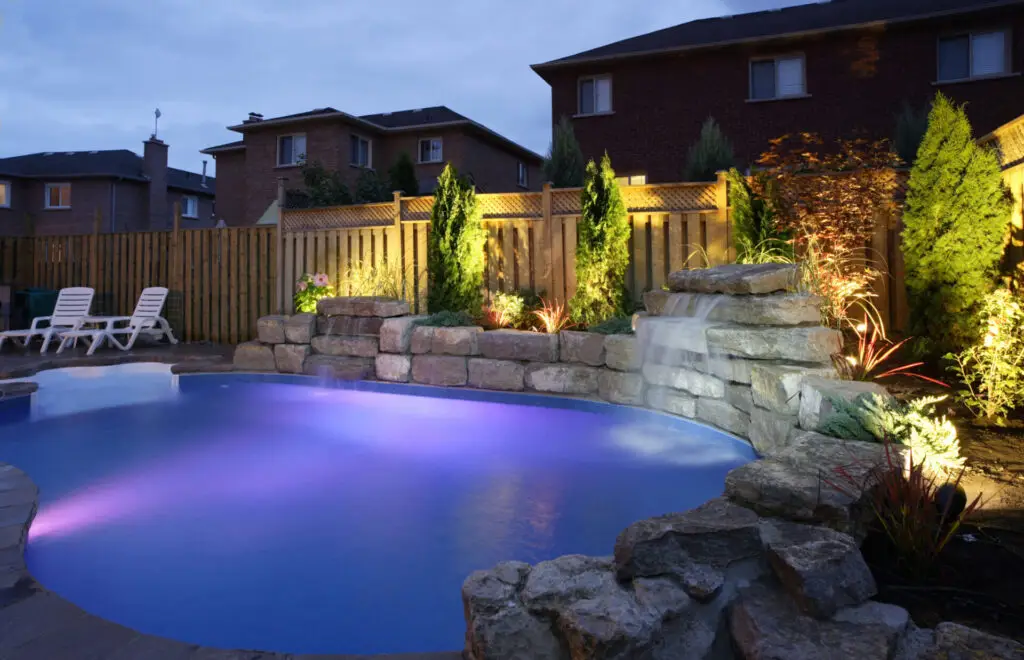
Understanding Michigan Pool Fence Requirements
Michigan has specific code requirements that apply to residential pool fencing. Before installation, every homeowner should know the minimums:
- Fence height of at least 48 inches
- Picket spacing of less than 4 inches, preventing children from squeezing through or gaining a foothold
- No climbable features: horizontal rails or decorative elements that function as a ladder are a code issue
- No more than 2 inches of bottom rail clearance from the ground to prevent children from getting underneath
Gates have their own requirements:
- Self-closing and self-latching, engaging automatically when released
- Latch positioned on the pool side of the gate, at least 54 inches above the ground
- Gate must swing away from the pool, not toward it
These are state minimums. Local municipalities across West Michigan sometimes layer additional requirements on top, and those vary by city and township. Always verify with your local building department before installation. Or, make sure you’re working with an installer who knows Michigan code and has been in this region for years and knows the local codes. Also remember, code requirements are a floor, not a ceiling, and the right fence does more than meet the minimum.
Choosing the Right Material for Your Pool Fence
Material choice affects how the fence looks, how it holds up over time, and how well it performs around pool chemicals and Michigan weather. The options are not equal for this application.
Aluminum ornamental fencing is the most common choice for pool installations in West Michigan, and for good reason. It’s rust-resistant, holds up against pool chemicals and harsh winters, requires almost no maintenance, and looks intentionally decorative rather than purely functional. A powder-coated aluminum fence frames the pool area and makes the water the focal point rather than drawing attention to the barrier itself. For homeowners who want safety compliance and a finished appearance, aluminum is usually the right answer.
Vinyl is a solid option for homeowners who want a more solid or semi-private barrier around the pool area. It won’t rust or rot, holds its appearance well, and works with certain home styles and landscaping where a clean, continuous line makes sense.
Chain link is functional and durable, and works well for larger pool enclosures where practicality matters more than aesthetics. Black vinyl-coated is worth the upgrade over standard galvanized for the same reason it always is: it sits in the landscape instead of on top of it.
For homeowners weighing their options, aluminum and vinyl perform very differently, and the differences are worth understanding.
Gate Design, Hardware, and Appearance
The gate is the most critical component of a pool fence from a safety standpoint, and the hardware is where most problems eventually show up. Self-closing hinges and a self-latching mechanism mean the gate engages every time, without anyone remembering to push it shut. The latch sits on the pool side, high enough to be out of reach of young children, and the gate swings away from the pool. These details are not stylistic preferences, they determine whether the fence effectively functions as a barrier.
Latches and hinges degrade with exposure to pool chemicals and our harsh Michigan weather. Quality hardware upfront is worth it, and so is testing the latch at the start of the season and periodically throughout. A latch that doesn’t fully engage defeats the purpose of both the gate and fence.
On the design side, pool fences don’t have to look utilitarian. Aluminum ornamental in black frames a pool area cleanly and lets the water be the feature, while vinyl in white or tan works well with certain home styles. Think about how the fence interacts with your patio, your landscaping, and the sightlines from inside the house, and think very carefully about gate placement before finalizing the layout. Most homeowners want at least two points of access: one from the house and one from the yard, and getting that right before installation is much easier than revisiting it after.
There are plenty of reasons to invest in a quality pool fence beyond just checking a compliance box, and the design choices you make upfront are a big part of that.
Your Dream Backyard Begins With Straight Line Fence
Pool fence installation has more variables than a standard fence for a typical yard. Grade changes around pool decks, concrete and paver surfaces, tight clearances near the water line, and code compliance all require real experience to get right. Post setting matters especially here, where ground conditions vary and mistakes are harder to correct after the fact.
A pool fence done right becomes a part of the landscape, not an eyesore. The right material, proper installation, and quality hardware all working together is what delivers peace of mind, not just a fence that technically meets code. That’s the difference between a fence that was installed and a fence that was installed correctly.
Pool season in West Michigan comes fast, and getting this done before the water is warm is the right call.
Contact Straight Line Fence for a free consultation on pool fence installation. We’ll walk your property, review your options, and make sure everything is installed to code and built to last.