
An automatic gate looks simple until the first January freeze arrives. Anyone who has lived through one here knows what the ground does: it freezes deep, it pushes back, and anything set too shallow ends up somewhere it wasn’t built to be. A post lifts a little, and from then on the gate binds and the latch misses the lock.
What decides all of this happens underground and behind the scenes, before the gate moves for the first time. We live and work here, and we plan every operated gate around what January will do to it. With the first hard freeze not far off, here is what goes into an automatic gate and what to settle before anyone picks up a shovel.
What Goes Into an Automatic Gate
An automatic gate is a group of parts that have to be planned together.
- The gate itself
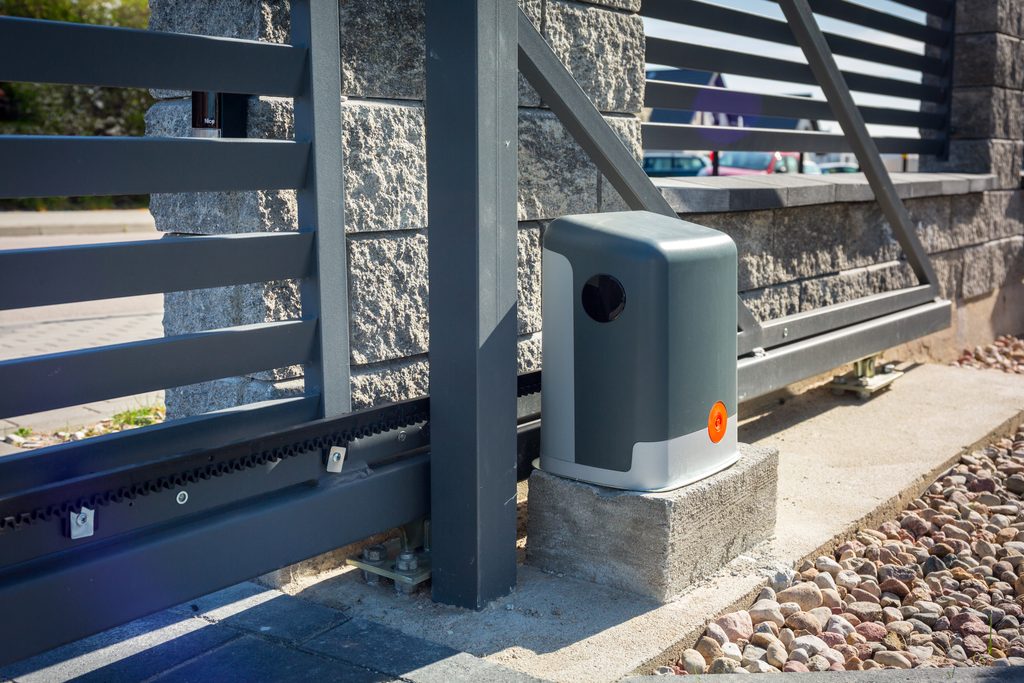
- The operator, which is the motor that runs it
- Power run to the gate
- Safety sensors
- The lock or latch that holds it shut
- The way you open it
You can open it with a remote, a keypad, or your phone, from the driveway or while you’re away. Our post on the benefits of automated gates makes the longer case for automation.
Planning What You Can’t See: Footings, Power, and Safety
The Footing
Michigan’s building code sets frost depth at 42 inches, so that is the number a gate footing has to account for. Water in the soil freezes, expands, and lifts whatever it can grip. A shallow gate post gets pushed up a little each winter, never evenly, until the gate binds.
A gate that locks on its own has to close in the same spot every time, and a moved post is where that breaks down. A small shift puts the gate out of line with its latch, and nobody is standing there to lift it into place.
Gate posts are dug, not driven, and each footing is sized for the gate and the ground. West Michigan ground changes from one property to the next, and rocks and buried debris turn up across the region. The right crew moves them instead of working around them, because a post set short to avoid a rock will move in January.
Power to the Gate
The operator needs power at the gate, and the line has to run before the gate does. Trenching to a finished gate means digging up a driveway or lawn that’s already done, and frozen ground makes that harder. Where the power runs should be settled before anything is built.
Safety Sensors
UL 325 is the safety standard for gate operators. On slide and swing gates, it calls for two independent means of protection against entrapment wherever a moving gate could catch someone, and photo eyes and edge sensors are common examples. Families with kids and pets need that protection, and so do businesses with public traffic. Sensors belong in the plan before the gate is hung.
Swing, Slide, or Cantilever: Which Gate Fits Your Property
The right gate depends on the property, and winter should have a say in it.
- Swing gates open like a door and need room to swing.
- Slide gates roll sideways, so they fit where a swing gate won’t.
- Cantilever gates slide with no ground track for snow and ice to fill, and they need clear space beside the opening of about 1.5 times its width.
A ground track packed with snow and ice can stop a slide gate on the one morning you need it, and where a property has the room, we lean toward cantilever. Our guide to choosing the right gate style goes further on fitting the gate to the opening.
Built for Michigan Winters, Homes, and Businesses
Snow, ice, and freeze-thaw cycles put more stress on a gate than on a standard fence, because a gate has to keep moving through all of it.
Moving parts need service, so the company that maintains the gate is as important as the one that builds it. Straight Line Fence answers the phone in year 1 and year 15, and an operated gate gives you reasons to call. The team that builds and maintains every gate is the team you’ll be calling.
On a home, you open the gate from inside the car or from anywhere else. You don’t get out in January to do it. It closes behind you, and with the right locking hardware it secures itself. On a business property, the gate controls who drives in and locks up after hours, so nobody stays late to do it.
You can see the gate systems we’ve installed in our portfolio.
Plan Your Automatic Gate with Straight Line Fence
Straight Line Fence plans the footing, the power run, and the sensors before the first post goes in, and winter is close enough that now is a good time to start. We handle automatic gate installation and gate operator installation for West Michigan homes and businesses, and we maintain the operated gates and gate operators after they’re built.
Photos of the opening and a sense of where the nearest power sits will help when you reach out. Contact Straight Line Fence for a free quote on your gate.
FAQs
What is a gate operator?
A gate operator is the motor and control unit that opens and closes an automatic gate. It connects to the power, the safety sensors, and whatever you use to open the gate, whether that’s a remote, a keypad, or your phone. Swing and slide gates use different operators, and the right size depends on the weight and width of the gate.
Can I open my gate from my phone?
Yes, as long as the operator and access system support it. Decide on phone control before the gate is built, because the opening method affects which operator and controls go in.
What’s the difference between swing, slide, and cantilever gates?
Swing gates open like a door and need room to swing. Slide gates roll sideways along the fence, so they fit where a swing gate won’t. Cantilever gates slide too, but they hang from rollers with no ground track, so snow and ice have nothing to fill. They need clear space beside the opening of about 1.5 times its width, so they suit properties with room to spare.
What safety features does my automatic gate need?
UL 325 calls for two independent means of protection against entrapment wherever a moving gate could catch someone, such as photo eyes and edge sensors. Guidance that goes with the standard also calls for a separate pedestrian entry, placed so nobody has to cross the path of a moving gate, and for slide gates with open pickets to be screened so no one can reach through. Families with kids and pets, and businesses with public traffic, have the most reason to get these right.
How does a Michigan winter affect an automatic gate?
Frost lifts shallow posts, and a post that has moved can put the gate out of line with its latch. A ground track on a slide gate can fill with snow and ice, and a cantilever gate avoids that because it has no track. Moving parts also need service, so plan on maintenance.